


No products in the cart.
Dance Comparisons
Latin Dance vs. Ballroom Dance: What’s the Difference?
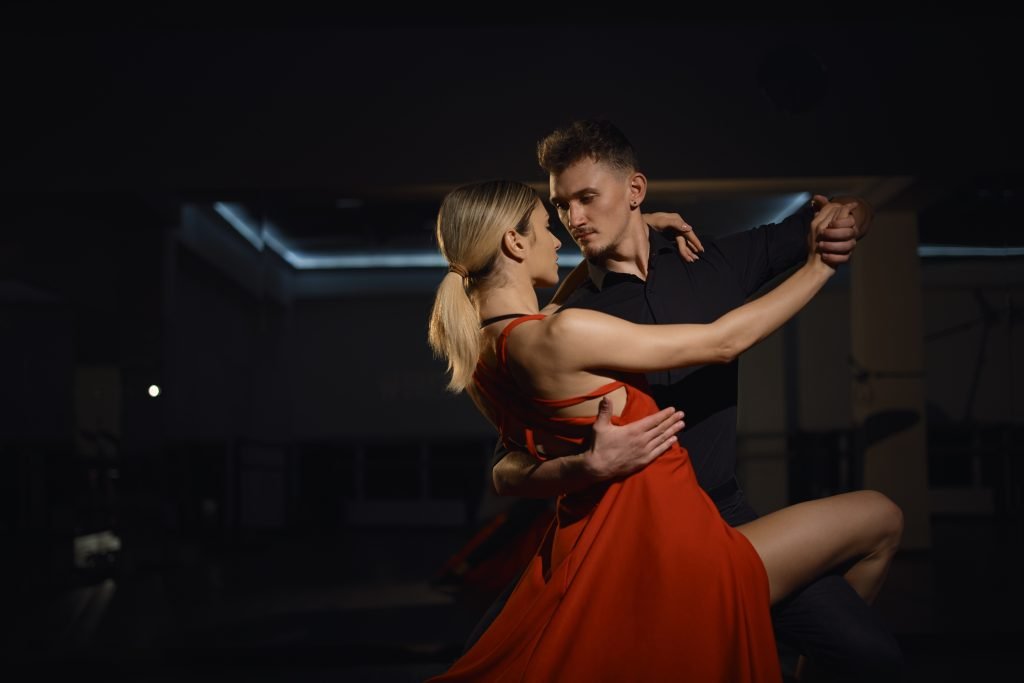
If you’re new to the dance world, you might wonder: What’s the difference between Latin dance and ballroom dance? While both involve partner dancing and graceful movement, they have distinct styles, techniques, and cultural influences.
Whether you’re considering taking up Salsa, Bachata, or Samba, or you’re curious about Waltz or Tango, this guide will break down the key differences between Latin and ballroom dance.
1. Origins & Cultural Influence
✔ Latin Dance: Comes from Latin America, the Caribbean, and Africa, with strong influences from Afro-Cuban, Dominican, Brazilian, and Angolan cultures.
✔ Ballroom Dance: Originated in Europe and North America, influenced by formal social dances from the Royal courts and high society events.
💡 Latin dance is vibrant and expressive, while ballroom dance is elegant and refined.
2. Dance Styles
🎶 Popular Latin Dances:
✔ Salsa (Cuba & Puerto Rico)
✔ Bachata (Dominican Republic)
✔ Kizomba (Angola, now popular in Latin dance scenes)
✔ Samba (Brazil)
✔ Reggaeton (Puerto Rico & Latin America)
🎩 Popular Ballroom Dances:
✔ Waltz (Austria & Germany)
✔ Foxtrot (United States)
✔ Viennese Waltz (Austria)
✔ Quickstep (England)
✔ Tango (Argentina—though it has Latin roots, ballroom Tango is different from Argentine Tango)
💡 Latin dances tend to be more rhythmic and grounded, while ballroom dances are more structured and elegant.
3. Posture & Frame
✔ Latin Dance: Dancers typically use a relaxed, close connection with a more fluid posture. There’s more hip movement, grounded footwork, and natural body expression.
✔ Ballroom Dance: Dancers maintain a strong, upright frame with a more formal, structured posture. Partners often hold a closed dance position with a defined lead-and-follow structure.
💡 Latin dance has a casual, body-driven style, while ballroom focuses on precision and frame control.
4. Connection & Expression
✔ Latin Dance: Encourages free movement, improvisation, and body expression. Many styles incorporate hip motion, isolations, and playful, social interaction.
✔ Ballroom Dance: Focuses on grace, posture, and synchronization between partners. Movements are more sophisticated and polished.
💡 Latin dance feels spontaneous, while ballroom dance feels more choreographed.
5. Music & Rhythm
✔ Latin Dance: Typically features percussion-heavy rhythms, syncopation, and beats inspired by Afro-Caribbean, Brazilian, and African influences.
✔ Ballroom Dance: Uses classical, jazz, and orchestral music, with smooth and structured tempos.
💡 If you love drum-heavy, upbeat music, Latin dance is for you! If you prefer classical and elegant melodies, ballroom is a great choice.
6. Social vs. Competitive Dance
✔ Latin Dance: Often danced socially at clubs, parties, and events. While there are competitions, Latin dance is primarily about fun, community, and improvisation.
✔ Ballroom Dance: More commonly seen in competitions and formal settings. It requires strict technique and choreography.
💡 Latin dance is more relaxed and social, while ballroom is often performance-based.
7. Footwork & Movement Style
✔ Latin Dance: Steps are typically grounded, with more weight shifts, hip movement, and intricate footwork. Dancers use small, controlled steps and emphasize musicality.
✔ Ballroom Dance: Movements are more linear and sweeping, with larger steps and elegant glides across the floor.
💡 Latin dance is about grounded, rhythmic movements, while ballroom is about fluid, graceful flow.
8. Attire & Dress Code
✔ Latin Dance:
- Social dancers wear casual, comfortable clothing.
- Performers wear vibrant, body-hugging outfits with fringes, sparkles, and flowy skirts.
- Shoes: Open-toe dance heels for ladies, flexible dance shoes for men.
✔ Ballroom Dance:
- More formal attire with elegant gowns for women and suits or tuxedos for men.
- Shoes: Closed-toe ballroom shoes with a structured sole.
💡 Latin dance outfits are bold and expressive, while ballroom attire is elegant and polished.
Which Dance Style is Right for You?
✅ Choose Latin Dance if you:
✔ Love energetic, social, and expressive movement.
✔ Want to dance in clubs, parties, or casual events.
✔ Enjoy percussion-heavy, rhythmic music.
✅ Choose Ballroom Dance if you:
✔ Prefer graceful, structured movement.
✔ Want to dance in a competitive or performance setting.
✔ Enjoy classic and elegant dance styles.
💡 Both styles offer amazing benefits—why not try both?
Why Learn Latin Dance at La Fiesta Dance Factory?
At La Fiesta Dance Factory, we specialize in fun, high-energy Latin dance styles that are great for all levels.
✔ Beginner-friendly classes that teach you the fundamentals.
✔ A welcoming community where you can practice and socialize.
✔ Expert instructors who break down technique in an easy-to-follow way.
✔ Styles include Salsa, Bachata, Kizomba, Samba & more!
Check out their Latin dance classes Sydney and start dancing today!
FAQ – Latin Dance vs. Ballroom Dance
Q1: Is Latin dance easier than ballroom dance?
A: Latin dance is often easier to start because it’s more relaxed and improvisational. Ballroom dance requires more precise technique and posture.
Q2: Do I need a partner for Latin or ballroom dance?
A: No! While both styles involve partner work, you can learn Latin dance solo or in a group setting before adding a partner.
Q3: Which dance style is more social?
A: Latin dance! Salsa and Bachata socials happen weekly at clubs and events, making it easier to meet people.
Q4: Can I switch from Latin dance to ballroom or vice versa?
A: Yes! Many dancers train in both styles to develop different skills.
Q5: Where can I learn Latin dance in Sydney?
A: Join Latin dance classes Sydney for beginner-friendly Latin dance lessons!