


No products in the cart.
How-To's
How Do You Go From Beginner to Advanced in Dance?
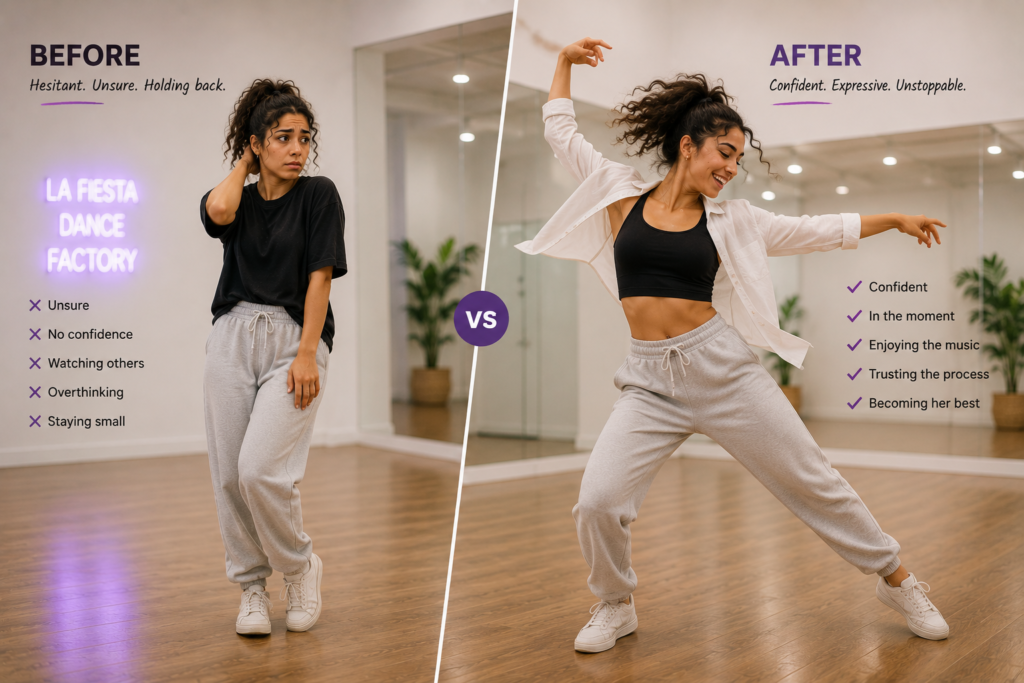
Going from beginner to advanced in dance does not happen overnight. Learning how to become an advanced dancer takes consistent classes, focused practice, strong technique and patience.
Every advanced dancer started with basic steps, simple combinations and plenty of mistakes. The difference is that they kept building their skills over time.
Here are 12 practical steps that can help you improve at dance and progress from beginner to advanced.
1. Master the Basics First
Strong foundations are essential for progressing in any dance style.
Before focusing on complicated choreography or advanced movements, make sure you are comfortable with:
- Basic steps
- Timing
- Weight changes
- Posture
- Balance
- Coordination
Strong basics make more advanced movement cleaner, more controlled and easier to execute.
2. Attend Dance Classes Consistently
One of the most important dance practice tips is simply to stay consistent.
If you only attend classes occasionally, it can be harder to retain movements and build technique. Create a routine that you can realistically maintain.
Try to:
- Attend classes regularly
- Stay at a level long enough to build confidence
- Review what you learned between classes
- Avoid rushing into advanced classes too quickly
Consistency over time is more useful than trying to improve everything at once.
3. Practise Outside of Class
Class gives you instruction and feedback, but practice helps turn new movements into familiar ones.
Even a short, focused practice session can be useful. Work on:
- Footwork
- Turns
- Timing
- Choreography
- Balance
- Styling
- Musicality
Instead of trying to practise everything at once, choose one or two skills and focus on improving them.
4. Focus on Technique, Not Just Steps
Learning more steps does not automatically make you a better dancer.
Technique is what helps your movement become controlled, precise and consistent.
Pay attention to:
- Posture
- Alignment
- Foot placement
- Weight transfer
- Control
- Timing
- Transitions
Advanced dancing is often less about knowing hundreds of moves and more about performing basic movements exceptionally well.
5. Develop Your Musicality
As your dancing improves, you will need to do more than simply remember choreography.
Musicality is your ability to hear and respond to different elements of the music through your movement.
Listen for:
- Changes in rhythm
- Musical accents
- Breaks and pauses
- Individual instruments
- Changes in energy
- Changes in melody
Instead of only following the beat, start thinking about how your movement can respond to what you hear.
6. Learn From Feedback
Instructor feedback can help you identify details that you may not notice yourself.
When your teacher gives you a correction:
- Listen carefully
- Ask questions if you do not understand
- Apply the correction
- Repeat the movement
- Remember it for your next class
Feedback is information that shows you where there is room to improve. Learning to use it effectively can accelerate your progress.
7. Practise With Different People
If you are learning a partner dance such as Salsa, Bachata or Kizomba, dancing with different partners can help you become more adaptable.
You may need to adjust to differences in timing, movement, experience and communication.
Practising with different people can help you:
- Improve leading or following
- Adapt to different movement styles
- Build confidence
- Improve connection
- Become more comfortable in social dance settings
This is an important part of progressing beyond simply memorising routines.
8. Challenge Yourself Gradually
Once you have built a strong foundation, gradually introduce new challenges.
You might:
- Try a more difficult class
- Learn faster choreography
- Attend a workshop
- Perform
- Practise with more experienced dancers
- Explore a different style
The goal is to challenge yourself without skipping the fundamentals.
Progress happens when you regularly work just beyond what is already comfortable.
9. Record Yourself Dancing
Recording yourself can reveal details that are difficult to notice while you are dancing.
Review your videos and look at:
- Timing
- Posture
- Arm movements
- Foot placement
- Balance
- Transitions
- Performance quality
You can compare older recordings with newer ones to see how your technique and confidence are developing.
10. Learn From Different Teachers
Different instructors can offer different perspectives on technique, musicality, styling and performance.
One teacher may explain a movement in a way that suddenly makes sense, while another may help you understand a completely different aspect of your dance style.
Workshops and additional classes can expose you to new approaches and help you become a more versatile dancer.
11. Develop Your Performance Skills
Advanced dancing is not only about technique.
Confidence, musical expression and stage presence can also make a significant difference.
Work on:
- Expression
- Eye focus
- Confidence
- Energy
- Musical interpretation
- Connection with an audience
- Finishing movements clearly
Even simple choreography can become much more engaging when it is performed with intention.
12. Be Patient With Your Progress
Dance progress is rarely a straight line.
You may have weeks where everything suddenly feels easier, followed by periods where your progress seems slower. That is a normal part of learning.
Instead of comparing yourself with other dancers, focus on your own development.
Ask yourself:
What can I do today that I could not do a few months ago?
Small improvements add up over time.
13. How Long Does It Take to Become an Advanced Dancer?
There is no fixed amount of time required to become an advanced dancer.
Your progress can depend on:
- How often you attend classes
- How consistently you practise
- Your chosen dance style
- Your previous experience
- The quality of your training
- How well you apply feedback
Someone who trains consistently may progress faster than someone who attends occasionally, but there is no universal timeline.
Rather than focusing only on reaching an “advanced” label, focus on developing stronger technique, musicality, confidence and control.
14. How Can I Get Better at Dancing Faster?
If you want to get better at dancing, focus on a few things consistently rather than trying to improve everything at once.
A simple approach is:
Attend → Practise → Get Feedback → Correct → Repeat.
Build your foundations, practise regularly, learn from your instructors and gradually increase the difficulty of what you are learning.
If you are looking for dance classes in Sydney, La Fiesta Dance Factory offers classes where dancers can develop their technique, musicality, confidence and performance skills across different dance styles and experience levels.
Ready to Take Your Dancing to the Next Level?
You do not need to be advanced to start improving. Begin with the basics, stay consistent and give yourself time to develop.
La Fiesta Dance Factory
Level 1, 112 Pyrmont Bridge Road, Annandale NSW
📞 0450 400 014
✉️ dance@lfdf.com.au
Explore our dance classes and find a class that matches your current level and goals.
FAQ – How to Become an Advanced Dancer
Q1: What is the key to becoming an advanced dancer?
A: Mastering the basics. Strong posture, balance, timing, and footwork create clean, controlled movement.
Q2: How do I progress faster?
A: Practice consistently and apply feedback. Regular classes, solo practice, and teacher corrections speed up your growth.
Q3: Why is musicality important?
A: It takes you beyond choreography. Musicality helps you express rhythms, accents, and instruments through your movement.
Q4: Should I dance with different partners?
A: Yes. Dancing with various partners improves adaptability, leading, following, and social dance confidence.
Q5: How can recording myself help?
A: It reveals hidden details. Reviewing video helps you fix timing, posture, and transitions.