


No products in the cart.
Special Occasions & Growth
Is One Dance Class a Week Enough to Improve?
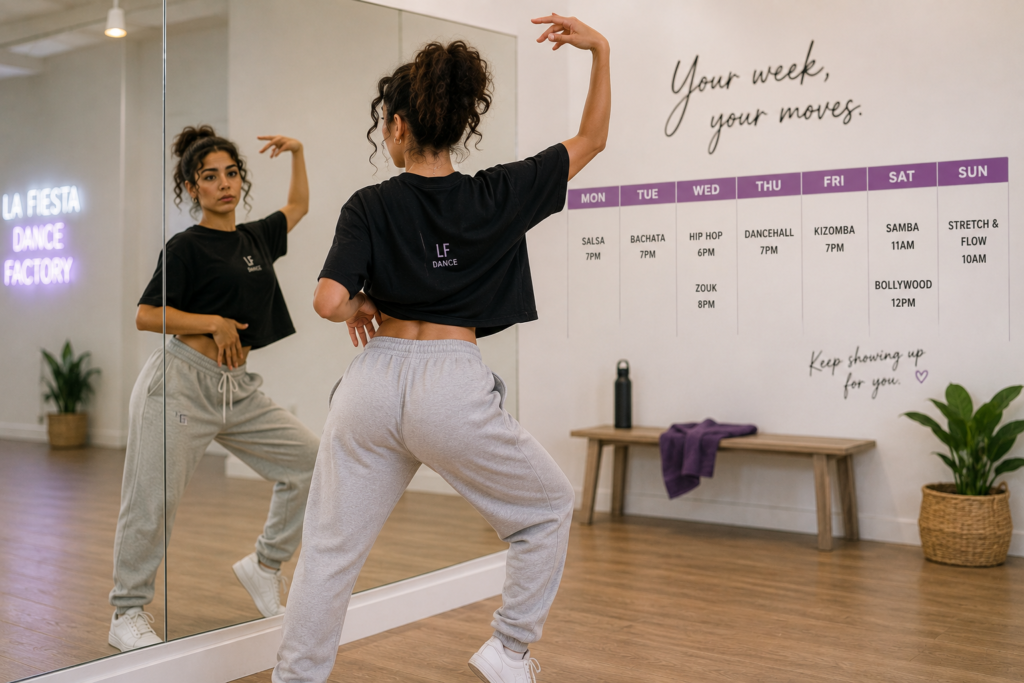
Yes—one dance class a week can be enough to make progress, especially when you are a beginner. Consistent attendance, attention to technique and a little practice between lessons can help you develop your skills over time.
Your progress will depend on your goals, chosen dance style and how you use what you learn. A weekly class can be a practical starting point for recreational dancing, while performance or advanced training may require more instruction and practice.
Here are eight ways to get more from your weekly dance class.
1. Attend Your Weekly Class Consistently
Regular attendance gives you the opportunity to revisit familiar movements and build on previous lessons.
A weekly routine can help you:
Remember basic steps and combinations
Develop timing and coordination
Apply corrections from your instructor
Become more comfortable with the class format
Choose a class that fits your schedule. A routine you can maintain gives you more opportunities to learn than an ambitious schedule you regularly miss.
2. Build Strong Basics Before Adding More Steps
When you begin dancing, even a simple combination can involve several unfamiliar skills.
Use your weekly lessons to work on:
Basic footwork
Weight changes
Posture
Balance
Timing
Transitions between movements
Learning more choreography is only one part of improving. Performing familiar steps with better control is progress too.
If you are unsure whether you are ready for the next level, ask your teacher which foundations still need attention.
3. Practise a Little Between Classes
Practice between lessons helps you revisit movements while they are still familiar.
Start with a short session—such as 10 minutes—and choose one or two things from your last class.
You might:
Repeat a basic step slowly
Review a short combination
Practise counting along with music
Focus on a specific correction
Check your foot placement and weight changes
Practise movements your instructor has already taught you. If you cannot remember how a movement works, ask for clarification at your next lesson.
4. Use Your Teacher’s Feedback
Repeating a movement is more useful when you understand what needs improving.
When your teacher offers a correction:
Listen carefully.
Ask a question if the explanation is unclear.
Try the adjustment.
Repeat the movement with that detail in mind.
Review it before your next class.
For example, if you struggle with a turn, your next practice session might focus on balance or foot placement rather than adding another turn.
One clear correction gives your practice a purpose.
5. Match Your Training to Your Goals
Whether one dance class a week is enough depends on what you want to achieve.
A weekly class can be a suitable starting point if you want to:
Learn dance as a hobby
Feel more comfortable dancing socially
Enjoy a regular activity
Develop basic skills and confidence
If you want to prepare for a performance, competition or more demanding class, you may need additional training.
Speak with your instructor about your goals. They can help you decide whether another class, a private lesson or focused practice would be most useful.
6. Listen to Music Between Lessons
You can work on recognising musical timing without practising a full routine.
Listen to music used in your class and try to:
Identify the steady beat
Count as your teacher has shown you
Notice repeated musical patterns
Recognise changes in energy
Connect familiar steps with the music
If finding the beat is difficult, ask your instructor to demonstrate it with a song you know.
Becoming familiar with the music can make your next lesson easier to follow.
7. Try Suitable Practice Opportunities
For partner styles such as Salsa, Bachata and Kizomba, a beginner-friendly practica or social dance can give you another opportunity to use familiar skills.
You can gain experience with:
Different partners
Different songs
Leading or following
Connecting simple movements
Dancing without following a fixed class routine
Keep your movements appropriate to your experience. Ask your teacher which practice opportunities suit your current level.
For solo styles, reviewing a familiar combination at home can help you remember the sequence between lessons.
8. Notice Progress Beyond New Moves
Improvement can be easy to miss when you only count how many steps you know.
Look for smaller changes:
You remember a combination with fewer prompts.
You stay on time more consistently.
Your weight changes feel clearer.
You recover more easily after a mistake.
You feel more comfortable asking questions.
There is no universal timeline for these changes. Compare your current dancing with your own earlier experience and use your teacher’s feedback to guide your next steps.
When Should You Add a Second Dance Class?
Consider another class when you want more guided practice, have a specific goal or feel ready for a greater commitment.
Before adding lessons, ask yourself:
Can I attend consistently?
Does the class suit my current level?
Will it support the skill I want to improve?
Do I have time to review what I learn?
More classes can provide additional instruction, but the value comes from attending, applying feedback and practising with attention.
A Simple Routine for Weekly Dance Progress
Make your weekly lesson part of a repeatable learning routine:
Attend → Review → Practise → Apply Feedback → Repeat.
After class, note one movement and one correction to revisit. Practise them briefly during the week, then return ready to ask questions and build on your progress.
Start with the time you have. You can adjust your schedule as your skills, interests and goals develop.
Start With Beginner Dance Classes in Annandale
If you are looking for dance classes in Sydney, La Fiesta Dance Factory in Annandale welcomes adults beginning their dance journey.
Explore our classes and ask which level suits your experience. One regular lesson can be a manageable way to start learning, meet other dancers and discover a style you enjoy.
La Fiesta Dance Factory
Level 1, 112 Pyrmont Bridge Road, Annandale NSW
📞 0450 400 014
✉️ dance@lfdf.com.au
Contact us to find a beginner dance class that fits your schedule and goals.
FAQ – Is One Dance Class a Week Enough to Improve?
Q1: Is one dance class a week enough to improve?
A: Yes, it can support steady progress. Consistent weekly lessons help you build skills, especially as a beginner. Your progress also depends on your goals, practice and how you apply feedback.
Q2: How should I practise between weekly dance classes?
A: Review one or two familiar skills at a time. A short session of around 10 minutes can help you revisit basic steps, timing or a correction from your teacher. Ask for clarification before practising movements you do not understand.
Q3: How long does it take to improve with weekly dance lessons?
A: There is no fixed timeline. Your experience, dance style, attendance and practice all influence progress. Look for improvements in timing, control and confidence rather than expecting a particular result by a set date.
Q4: When should I take more than one dance class a week?
A: Add lessons when they support your goals and fit your routine. Extra instruction may help if you want more guided practice or are preparing for a performance. Ask your teacher which class or training option suits your level.
Q5: Can I improve at partner dancing without practising with a partner at home?
A: Yes, you can develop individual skills on your own. Review familiar footwork, timing, balance and weight changes between lessons. Classes and suitable social practice provide opportunities to work on leading, following and connection.