


No products in the cart.
Music & Culture
Understanding Latin Rhythms: How Music Affects Your Dancing
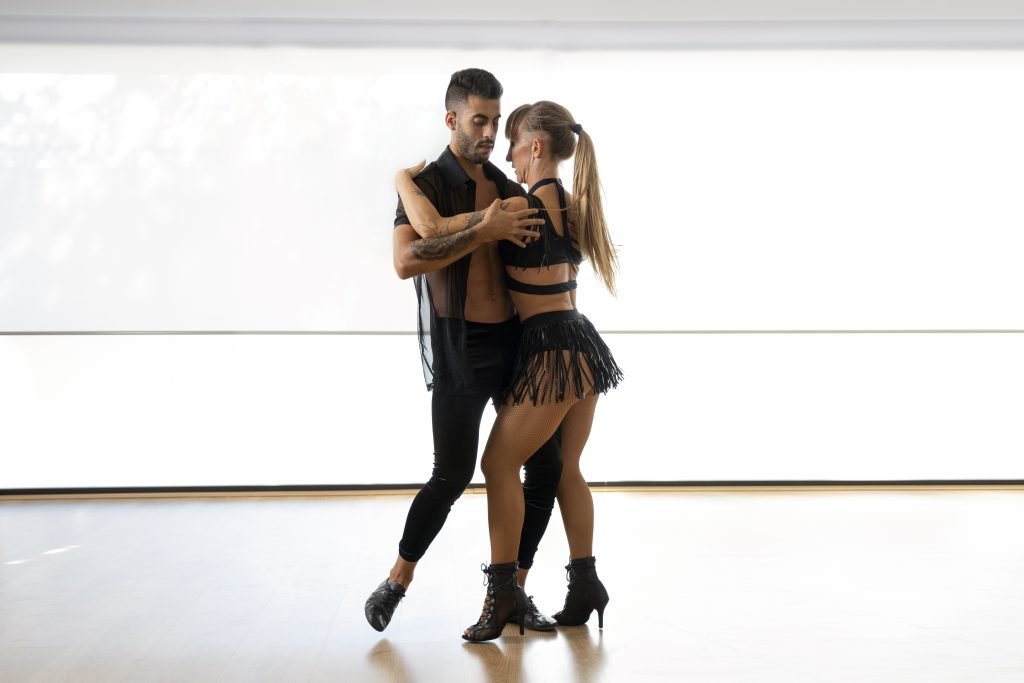
Latin dance is all about rhythm—it’s what makes your movements feel natural, fluid, and connected to the music. Whether you’re dancing Salsa, Bachata, Kizomba, or Samba, understanding Latin rhythms will help you improve timing, musicality, and expression on the dance floor.
If you’ve ever felt lost in the music or struggled to match your steps to the beat, don’t worry! This guide breaks down Latin rhythms and how they shape your dancing.
1. What Is Rhythm in Latin Dance?
Rhythm is the pattern of beats in music that dancers follow to stay on time. Every Latin dance style has its own unique rhythm, influenced by traditional instruments, tempo, and cultural origins.
✔ The beat tells you when to step.
✔ The tempo tells you how fast or slow to move.
✔ The accents tell you when to add styling or pauses.
💡 Great dancers don’t just count steps—they feel the rhythm in their body!
2. Salsa Rhythms – Fast & Energetic
🎵 Salsa music is built on an 8-count rhythm: “1-2-3, 5-6-7” (beats 4 and 8 are pauses).
🥁 Key Instruments: Clave, Conga, Bongos, Piano
⚡ Vibe: Upbeat, dynamic, and perfect for quick footwork
✔ Find the Clave – The clave rhythm (3-2 or 2-3 pattern) is the heartbeat of Salsa.
✔ Step on beats 1, 2, 3, and 5, 6, 7 – The pauses on 4 and 8 create the classic Salsa feel.
✔ Match your energy to the song – Some Salsa is smooth, some is fast and fiery!
💡 Tip: If you can hear the clave, you’ll never lose the rhythm in Salsa!
3. Bachata Rhythms – Smooth & Romantic
🎵 Bachata has a simple “1-2-3, tap” rhythm (the tap is on count 4).
🥁 Key Instruments: Guitar, Bass, Bongo, Güira
💃 Vibe: Sensual, smooth, and flowing
✔ Step on beats 1, 2, 3, then tap on 4 – This gives Bachata its signature bounce.
✔ Use the guitar melody for styling cues – Slower Bachata songs allow more body movement.
✔ Adjust for Modern vs. Traditional Bachata – Some songs have a more urban feel, while others are more traditional.
💡 Tip: Listen for the guitar—Bachata’s signature sound comes from its unique melodic patterns!
4. Kizomba Rhythms – Slow & Grounded
🎵 Kizomba follows a steady “slow, slow, quick-quick” beat (depending on the song’s structure).
🥁 Key Instruments: Bass, Drums, Synthesizers
💃 Vibe: Smooth, flowing, and deeply connected
✔ Step naturally with the bass beat – The deep bass line leads your movement.
✔ Focus on body connection – Kizomba is about flow, not sharp movements.
✔ Play with musical accents – Kizomba has pauses and slowdowns that allow for creativity.
💡 Tip: Think of Kizomba as “walking with style”—smooth, controlled, and connected to the beat!
5. Samba Rhythms – Fast & Bouncy
🎵 Samba has a fast-paced “1-a-2, 3-a-4” rhythm (syncopated beats).
🥁 Key Instruments: Surdo Drum, Tamborim, Agogô, Cavaquinho
💃 Vibe: High-energy, fun, and rhythmic
✔ Bounce with your knees to stay on rhythm – Samba has a natural “up-and-down” motion.
✔ Keep footwork light and precise – The music is fast, so small steps work best.
✔ Feel the groove of the percussion – Samba is heavily driven by drums, so listen for them!
💡 Tip: If you feel the “bounce” in Samba, you’ll stay on rhythm naturally!
6. How to Train Your Ear for Latin Rhythms
If you struggle with rhythm, try these simple exercises:
🎧 Listen to Latin music daily – Play Salsa, Bachata, Kizomba, and Samba and try to count the beats.
👏 Clap or tap the beat – Before stepping, feel the rhythm by clapping along.
👣 Step in place with the beat – Practice stepping in time with different songs.
🎼 Break down the instruments – Focus on hearing the clave, bass, or percussion in each style.
💡 The more you train your ear, the easier it will be to dance on beat!
7. Why Musicality Matters in Latin Dance
✔ Good musicality makes dancing feel natural – You’re moving with the song, not against it.
✔ It helps you improvise – Feeling the music allows for creative expression.
✔ Better connection with partners – In partner dancing, musicality makes every movement smoother.
✔ Makes your dancing look effortless – When you’re in sync with the music, every step looks polished.
💡 The best dancers don’t just do steps—they interpret the music!
Why Learn Latin Rhythms at La Fiesta Dance Factory?
At La Fiesta Dance Factory, we teach dancers how to understand and feel Latin rhythms, not just memorize steps.
✔ Beginner-friendly classes that help you dance on beat.
✔ Step-by-step rhythm breakdowns for Salsa, Bachata, Kizomba & Samba.
✔ Musicality exercises to improve your timing & connection.
✔ A welcoming dance community where you can practice with live music.
Check out their Latin dance classes Sydney and start dancing with rhythm today!
FAQ – Understanding Latin Rhythms
Q1: How do I know if I’m dancing on beat?
A: Listen for the downbeat (strongest beat in the measure) and step on it.
Q2: What’s the best way to improve my musicality?
A: Listen to Latin music daily, tap the beat, and practice stepping in time.
Q3: Why do I struggle with Salsa timing?
A: Salsa has an 8-count rhythm with pauses on 4 & 8—try counting “1-2-3, 5-6-7” aloud.
Q4: How do I dance to different speeds of Bachata?
A: Adjust your movement size and energy to match slower or faster songs.
Q5: Where can I learn to dance with better musicality?
A: Join Latin dance classes Sydney for expert musicality training!